
Introduction
I believe that horror actually overlaps with several common autistic experiences—outsider identity, heightened sensory input, rule systems, transformation, masking, meltdowns, and social observation.
I struggle to recall my earliest experiences with horror – something that scared me. My father told me he took me to see Bambi when I was two or three. I cried when the forest burned down. When I saw Snow White, of course I liked the main character, but I was strangely attracted to the wicked Queen. There was something compelling about her – her darkness. Her solitude. I think she was misunderstood or there was something other people were failing to realize. Also, there was something about her face that appealed to me – and the costume. She was goth before I knew what goth was.

I must have been two or three when I watched Abbott and Costello Meet Frankenstein with my father. I also recall seeing the 1971 Christmas animation The Selfish Giant and being terrified by the north wind, hail, frost and snow – as they danced upon his roof. I had nightmares about that. To this day, I still think I hear things on my roof.
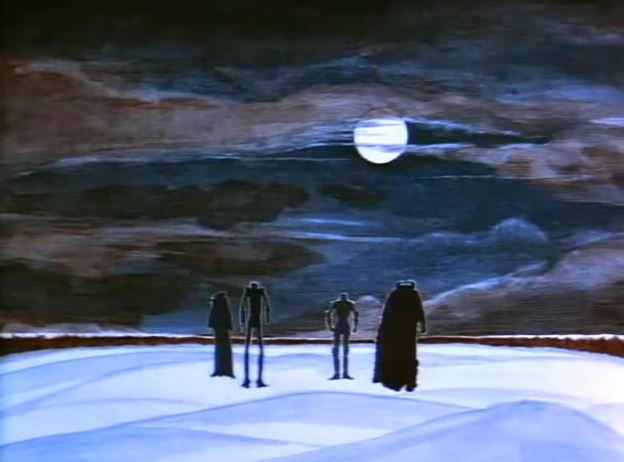
An early horror film that frightened myself and my sisters was
Some of my earliest memories of horror aren’t even full movies—they are the ads. When The Exorcist first appeared on network television in 1980, I was terrified. The idea of a child possessed—the same age as me—felt profoundly wrong. Raised in a strict religious household, I believed the sacred should never be violated. The ads felt forbidden, adult, dangerous. But at the same time, they pulled me in. Fear made me present. I felt both guilty and captivated, like I was crossing a line I wasn’t supposed to.
Horror had a way of pulling me completely into the moment. I felt alert, focused, almost electrified. At the same time, there was guilt — the sense that I shouldn’t be watching this, that it was something forbidden. That mixture of fear, fascination, and taboo made horror incredibly compelling.
Monsters I Relate To
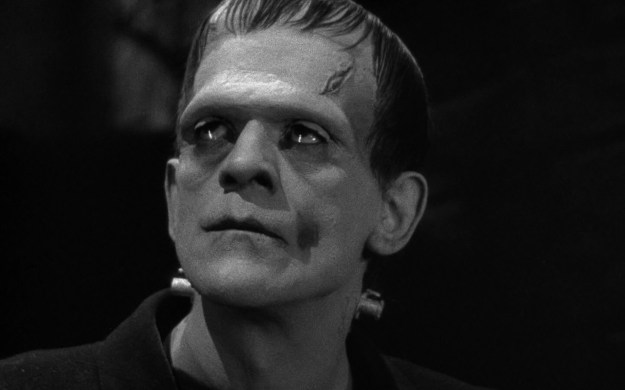
I’ve always been drawn to monsters, especially those who are misunderstood. Frankenstein’s monster is a perfect example. From the moment he came into being, he was trapped—like a child stuck in an adult body, unable to grow naturally or connect with others. His attempts at communication failed, his frustration exploded, and only a blind man could accept him. Part of the connection is the feeling of wanting to communicate but not being understood. Prone to meltdowns, since he can’t verbalize his anxiety. I felt for him immediately. I recognized his struggle to communicate, to belong, to navigate a world that didn’t understand him. I often feel like there is still a younger, confused version of myself inside. Horror helps me process that feeling.
Feeling Like the Outsider
Many horror stories revolve around characters who are different from everyone else.
Think about monsters like Frankenstein’s monster or even creatures like Godzilla—they exist outside society and are often feared or misunderstood.

In grade 6, I realized I was different from other kids. I was starting to diverge from them. I was losing friends. To fill the gap, I turned to culture – and particularly horror films. Horror characters make that feeling easier to understand. I thought: “That monster is misunderstood like I am.”
Even as a kid, I often found myself drawn to characters that weren’t the obvious heroes. For example, watching Snow White and the Seven Dwarfs. I loved Snow White, but I was strangely fascinated by the evil Queen.
Looking back, I think this connects to something many autistic people experience: a sense of being outside the social world looking in. Monsters and villains are often misunderstood, alienated, or rejected by society. Even when they are dangerous, there is often something lonely about them. That loneliness can feel familiar.
Watching Humans From the Outside
I’ve often felt like the man who fell to earth – watching humans interact. People move together in formation like fish, birds, or sheep – with such ease. How do they do it? I have no idea. How do I jump in? When? Should I try at all? What is the secret password? Many horror monsters behave exactly this way—they observe humans from the fringe.
Watching humans from the outside has always felt familiar to me. Even as a toddler, I played on the edge of groups, observing, learning, trying to figure out how to join in. Monsters mirror that experience: they watch, study, try to understand humans, and often feel isolated, like outsiders trying to navigate a world that doesn’t accept them.
I used to consciously study other kids to figure out how to behave. A lot of my role models were in culture though – films, TV and comics. That is how I learned – for better or worst – to mimic others – to mask my true self. It felt like social interaction was something I had to learn intellectually rather than naturally. Horror movies sometimes show that feeling of being outside the group better than non-genre movies.
Monsters watch but cannot become human, so they become angry, frustrated, and resentful toward humanity. Monsters are often seen stalking and closely observing before attacking. Now – I’m not referencing standard slasher films but films that are more thematically and philosophy rich. I am not interested in sex or misogyny. I’m interested in the trapped child – observing, reacting because they cannot relate or be understood. I like monsters who we see born and/or evolving. I like to know a bit about their past but not so much that the mystery is ruined. I like the mixed feeling of empathy but repulsion; I find it challenging. Being on a knife’s edge. Watching and enjoying something forbidden. Living vicariously through the actions of a villain.
Masking and Transformation
Transformation scenes are a huge part of horror. Characters change shape, reveal hidden identities, or struggle between two selves.
Perhaps subconsciously, transformation scenes resonate with the experience of masking (acting “normal” in public).
I’ve often felt that I had two versions of myself—the public one and the real one. Thus I relate to characters who are hiding their true nature.
Horror as a Safe Release
Horror films allow me to experience emotions I can’t always express in real life. Anger, frustration, rebellion—monsters and villains express them fully, safely, and without consequence. I grew up in a restrictive environment—strict religion, conservative small-town culture, bullying, and anxiety—which held me back from expressing discontent—fighting for my rights.. Horror movies let me live vicariously through characters who fight back, who break rules, who go all the way. Watching these extremes releases tension and gives me a sense of freedom I can rarely access in my own life. Monster movies allowed me to release anger. They go all the way. I would never do that.
There’s another satisfaction too: in horror, bullies and cruel people are often punished. People who seem to get away with everything—popular kids, controlling adults, those who break rules—are made to face consequences. This kind of narrative justice is rare in real life, and it feels deeply satisfying.
Part of horror’s appeal is that it lets me safely explore dark or rebellious feelings that I normally wouldn’t express. I don’t have the courage or confidence to do it. I am held back by many things. These stop me from living a full life. They limit how I interact with society.
Mystery, Craft, and Connection
Part of the appeal is also technical. I love analyzing how effects are created—makeup, prosthetics, lighting—but I also like to preserve the mystery. Talking about movies with friends became a social bond, a way to connect with people over something I loved. Restrictions made fascination stronger. When I was forbidden from watching Godzilla as a child, it only made my obsession grow. My friends and I shared the joy of seeing Godzilla wreak havoc—releasing anger, celebrating heroism, and living vicariously through his adventures.
I used to make my own Godzilla movies. I was obsessed with Godzilla in grade two. I would draw him all the time. My teacher told my parents and they forbade me from watching his movies. I was devastated – angry. I wanted to rebel.
The character Godzilla is actually a great example of a monster that is both destructive and sympathetic.
I am a fan of Tom Savini and Dick Smith. I enjoy reading about what goes into special effects and make up – the planning, the skill, the mechanics of it.
I enjoy analyzing how the effects were created almost as much as the story itself.
For example:
- noticing prosthetics
- makeup techniques
- camera tricks
- practical effects
I try to figure out how they did it. but at the same time I don’t want to know – I like the mystery. I talk about them with friends – it was a social bond. Something I could relate with. I had friends based on what movies we liked. Culture was a very important socializing tool for me as a teenager.
Certain images linger: transformations, body horror, surreal nightmare-like scenes. They stick in my mind, sometimes appearing in dreams. Horror is vivid, emotional, and unforgettable, and I think the sensory experience—lighting, makeup, sound—plays a huge role in why it captivates me.
Clear Rules vs Confusing Social Rules
Real life can have confusing social expectations. Horror often works with clear rules.
For example:
- “Don’t open that door.”
- “Don’t summon the demon.”
- “The monster comes out at night.”
- “Bring garlic and a crucifix.”
Perhaps I find horror satisfying because the rules of the world are clearer than real life. I often feel frustrated in real life because rules feel inconsistent or arbitrary. But in horror films, problems get solved. Often science and logic play a role. Strategies must be employed. Monsters have a plan, so you must plan to overcome them.
Justice and Moral Order
Being autistic, I have an unwavering sense of justice (sometimes to a fault) and tend to be attracted to moral codes from different cultures (e.g. the Samurai code, Boy Scouts, Taoism, Buddhism, Myths, Fables, the Bible).
Perhaps I like horror when bullies or arrogant characters (many of whom plagued me throughout high school) get punished. Horror often has a moral structure, even when it’s chaotic. Horror stories sometimes feel like a fairer world than real life. Perhaps difficult to admit, but I feel relief when cruel, vain, arrogant, or pretentious characters face consequences.
Emotional Clarity
Horror movies amplify emotions, making them easier to read than everyday social cues. Fear, panic, anger, revenge—they are heightened, unambiguous. Science, logic, and strategy often guide the plot. Monsters have plans, humans react, problems are solved. Familiar tropes make the story predictable, which is comforting in contrast to the unpredictability of real life.
Another reason horror works for me is that the emotions are clear. In everyday life, social signals can be subtle and confusing. Faces, tone, body language — they’re often ambiguous. Horror tends to exaggerate everything. Faces are intense. Emotions are heightened. Fear, anger, desperation — they are all displayed in ways that are easier to read. The visual language is bold and obvious.
That clarity can make horror easier to process than quieter, more subtle dramas.
Feeling Alive
Watching horror makes me feel alive. Living vicariously through the highs and lows of the story gives me adrenaline and focus. Horror is a safe way to explore dark or rebellious feelings, to feel emotion fully, and to connect with a community of fellow fans. I experience a sense of adventure, excitement, and engagement that everyday life rarely allows.
Horror helps me focus – live in the moment. It catches my attention. It excites me. I am not a particularly physical person. I don’t enjoy extreme sports or risky activities. But horror movies give me something similar in a safe way: adrenaline. They carry me away. I don’t like speed or risk, so these movies give me a sense of that.
Horror films stimulate my brain and hold my attention in a way that few other genres can. When I’m watching a good horror movie, I’m completely in the moment. My mind isn’t wandering. I’m not overthinking social cues or distractions. The intensity carries me away. In a strange way, horror helps me regulate my attention.
Horror films are very sensory-heavy: dramatic lighting, loud sound design, intense visuals. Perhaps autistic people like myself find horror stimulating because it focuses attention.I do think that horror locks my brain into focus more than other genres. The visuals, makeup, and lighting feel almost hypnotic – absorbing. Thus there are certain horror moments where I feel completely immersed.
For me, horror is more than entertainment. It is a space where emotions are big and clear, where outsiders like me can relate to monsters, and where I can safely explore feelings that the real world often suppresses. Horror movies let me live, feel, and belong—even if only for the duration of the film.
Community and Belonging
For me, horror fandom is a social bridge. Horror gave me a way to connect with people when other social activities didn’t work. Discussing movies make socializing easier because I had a shared script or topic – of which I was an expert.
When people watch horror together, they react together. They gasp, laugh nervously, or jump at the same moment. The emotions are shared and immediate.
For someone who sometimes struggles to find an easy entry point into social situations, that shared emotional experience can create connection.
Horror becomes a way in.
 Trapped on a rock floating in space